Six shapes, and the walls they want
We make six shapes, and the shape decides the wall more than the subject does. A panoramic needs a wide wall with something tall beneath it; an upright climbs a narrow one. Pick the shape your wall wants, and the size follows.
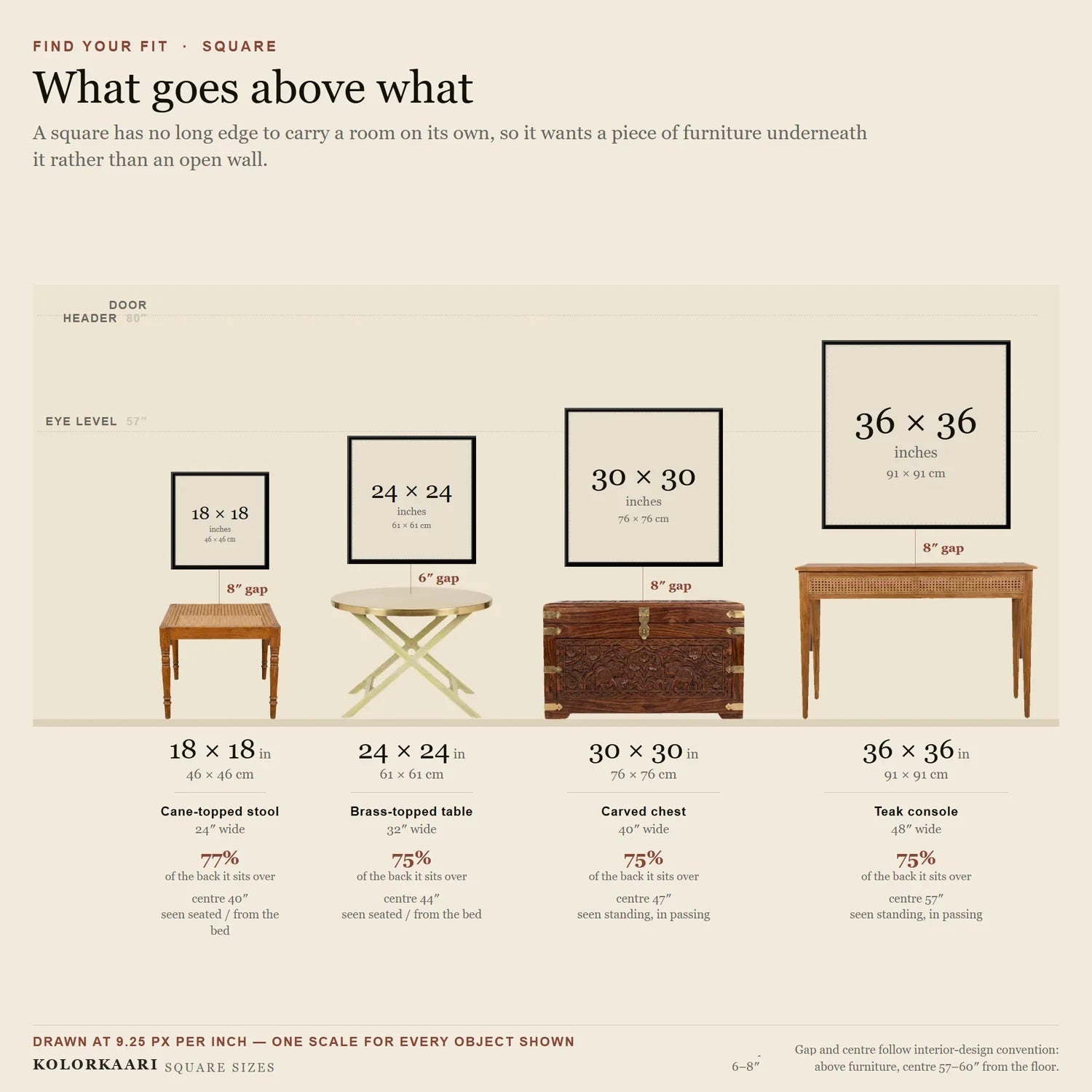
Square
A square has no long edge to carry a room on its own, so it wants a piece of furniture underneath it rather than an open wall. It is the most forgiving shape to hang in a pair or a grid, and the least forgiving to hang alone above nothing.
Square sizes suit a chowki, a side cabinet, a chest, a low console - anything with a clear horizontal top. Two squares side by side read as one wide piece and will cover a sofa back that no single square in the ladder can.
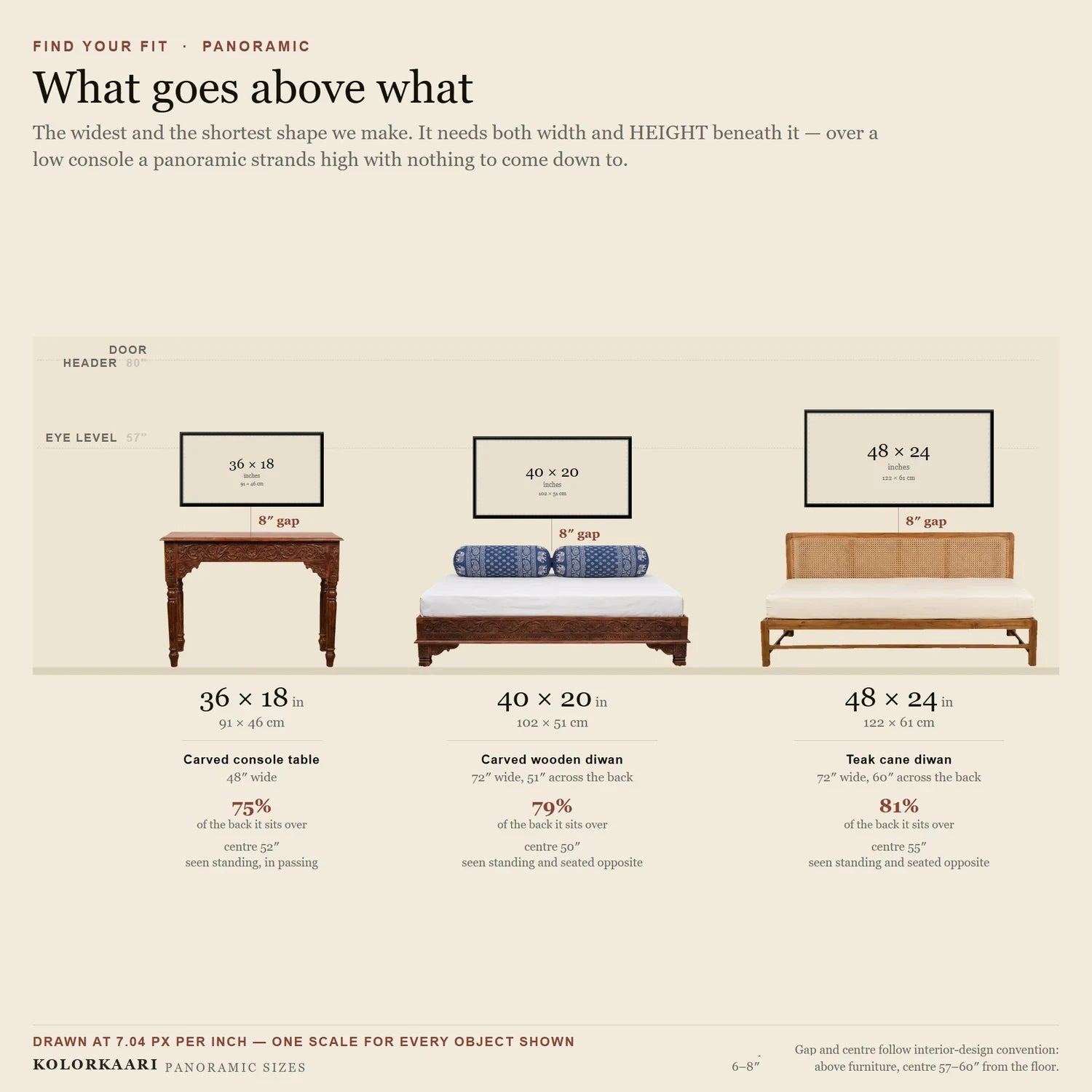
Panoramic
The widest and the shortest shape we make, and the one most often hung wrong. A panoramic needs width beneath it AND height beneath it: over a low console it strands high on the wall with nothing to come down to.
Reach for a panoramic when the wall is wider than it is tall - above a diwan, a bed, a long sideboard, or the run of wall above a staircase landing. It is the only shape in the ladder that will fill a 6-foot sofa wall without a second piece.
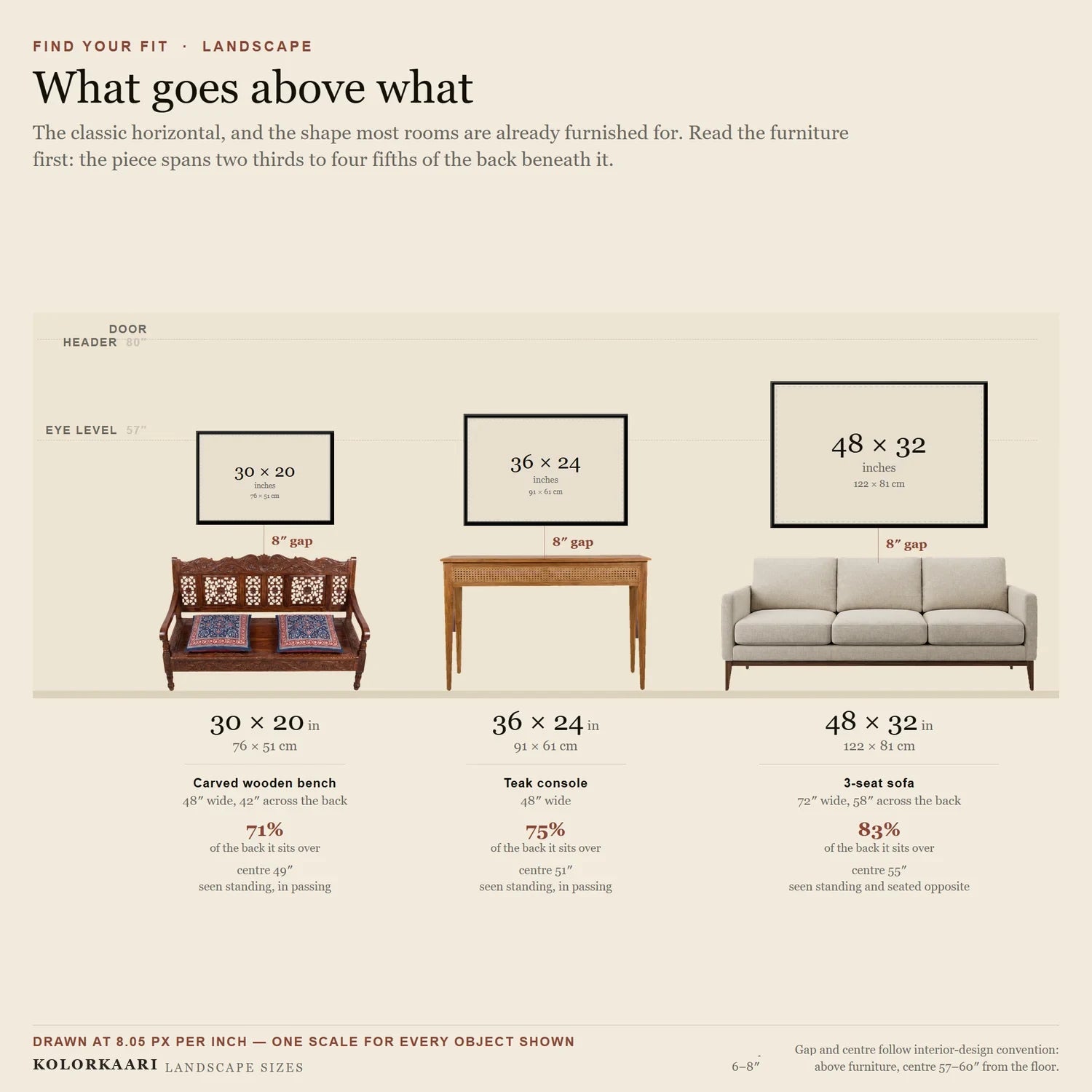
Landscape
The classic horizontal, and the shape most Indian rooms are already furnished for. Read the furniture first: the piece should span two thirds to four fifths of the back beneath it, and the size then chooses itself.
If you are not sure what to buy, this is the rung to start on. A 36 x 24 over a 48-inch console is the single most reliable pairing in the whole guide.
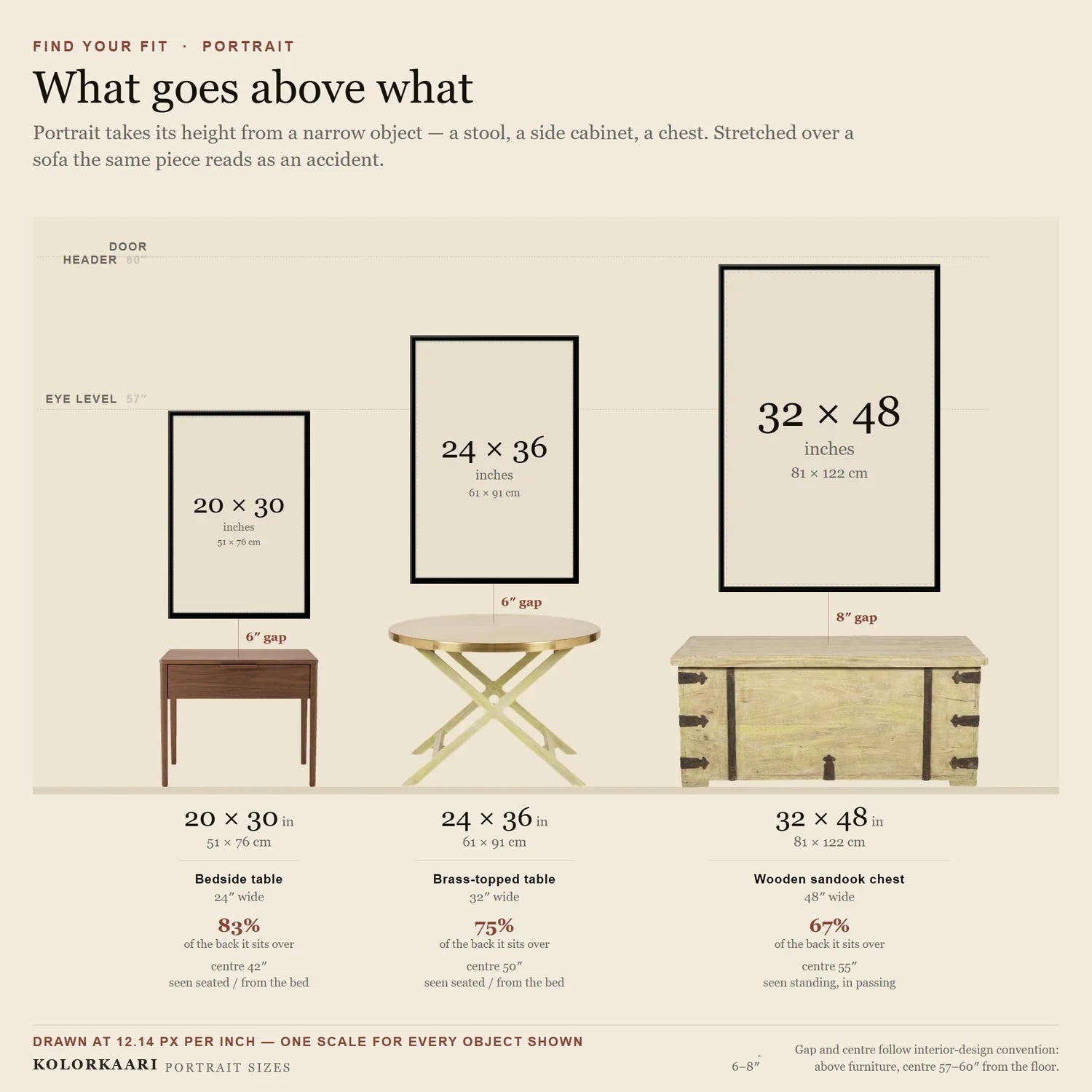
Portrait
Portrait takes its height from a narrow object - a stool, a side cabinet, a chest. Stretched over a sofa the same piece reads as an accident: too small for the wall, too tall for the furniture.
Portrait is what a narrow wall wants - the strip between two doors, the return beside a window, the wall at the top of a stair. It also hangs well in a vertical pair, one above the other, on a tall wall with a low object at its foot.
Wide landscape
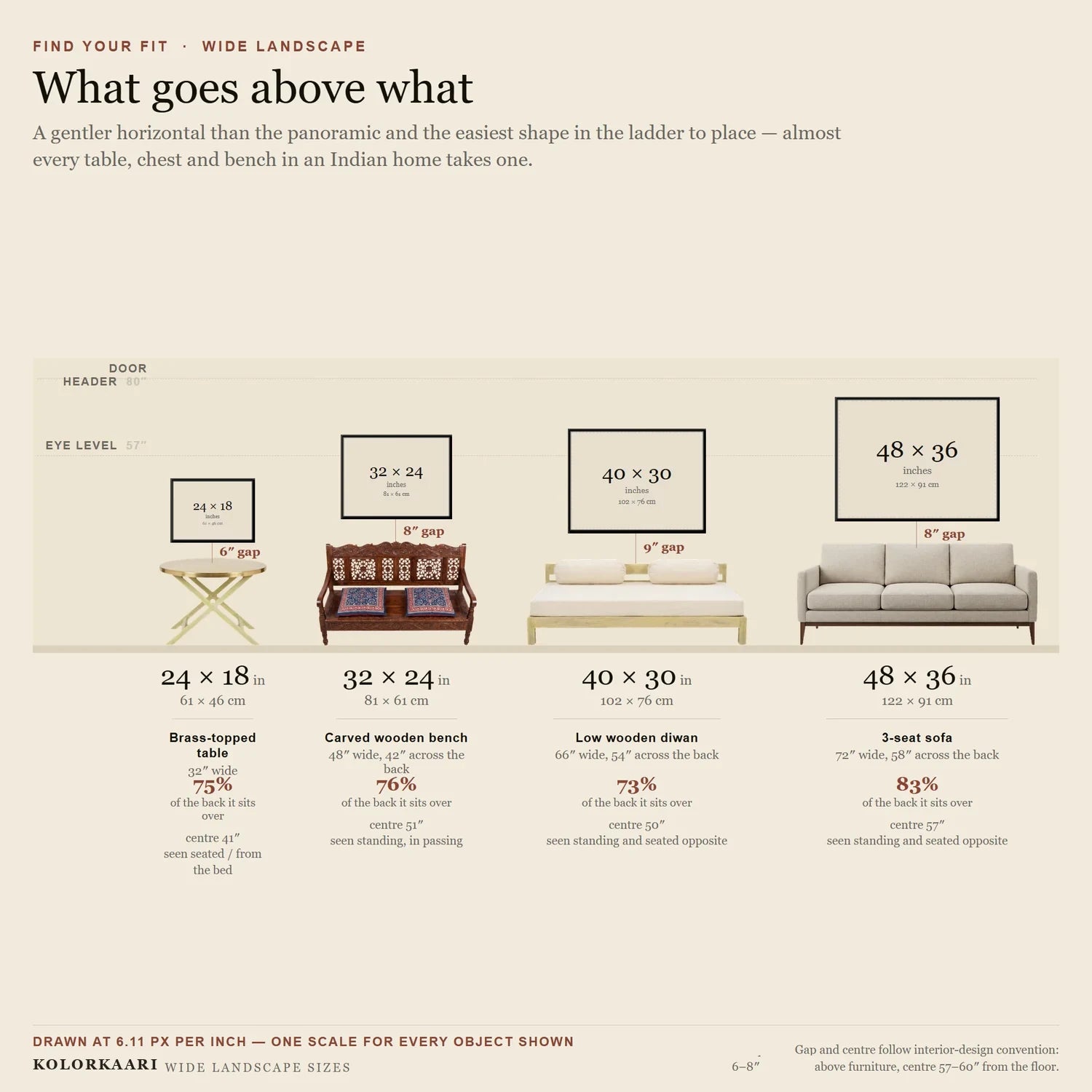
A gentler horizontal than the panoramic and the easiest shape in the ladder to place - almost every table, chest and bench in an Indian home takes one without argument.
Choose 4:3 over 3:2 when the wall is short: the extra height gives the piece more presence at the same width, which matters above a low chowki or a manji where the wall above is the whole event.
Upright
The upright sizes climb a wall rather than cross it. Each wants a piece roughly a third wider than itself beneath it, and no more - an upright over a wide sofa looks stranded however good the painting is.
Uprights are the workhorses of an entrance hall, a stairwell and a bedside. They are also the shape that survives a narrow room best, because they take almost no wall width.
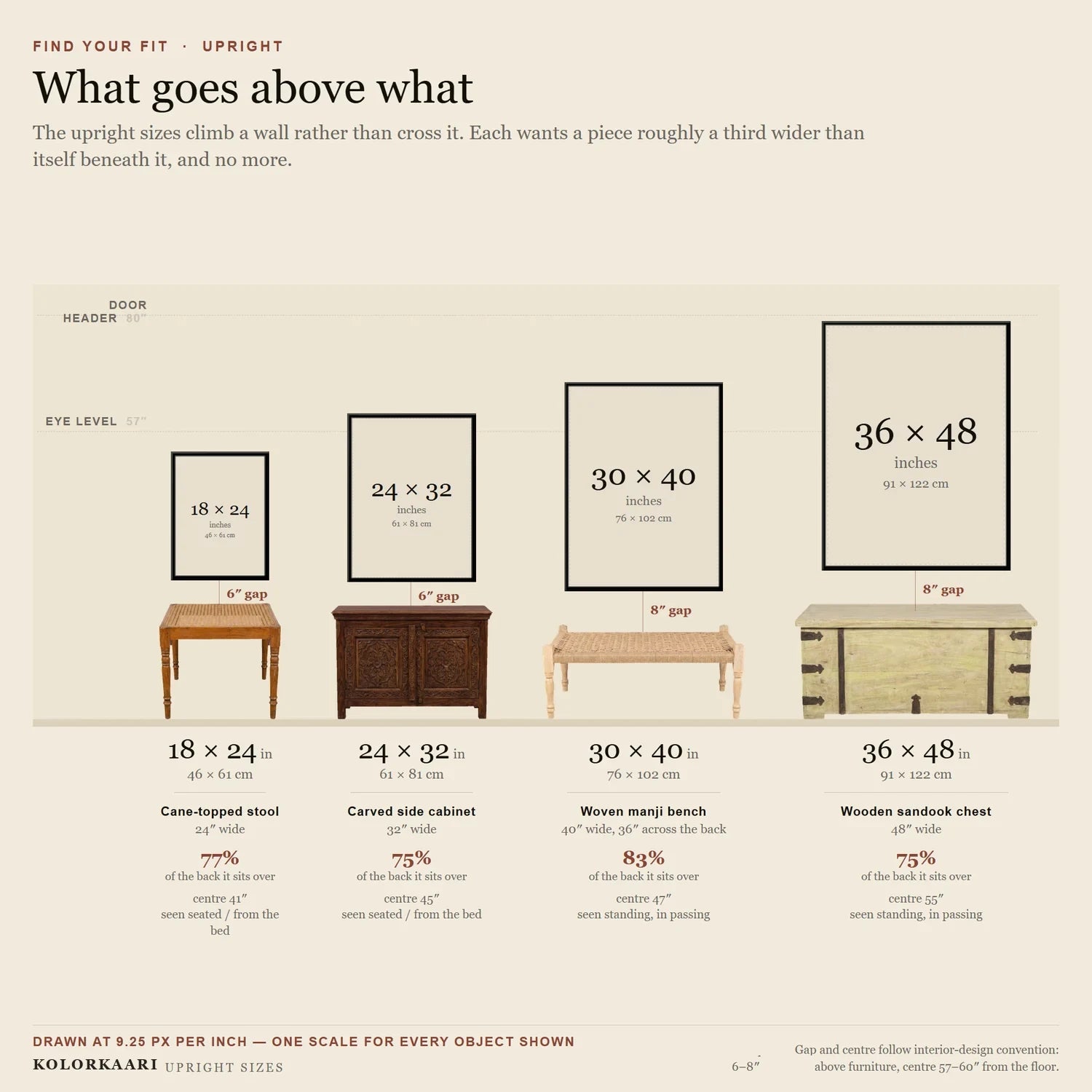
Furniture shown throughout is for scale only and is not included with any canvas. Every drawing is built at a single pixels-per-inch. How these drawings are made.