Before we paint, we listen.
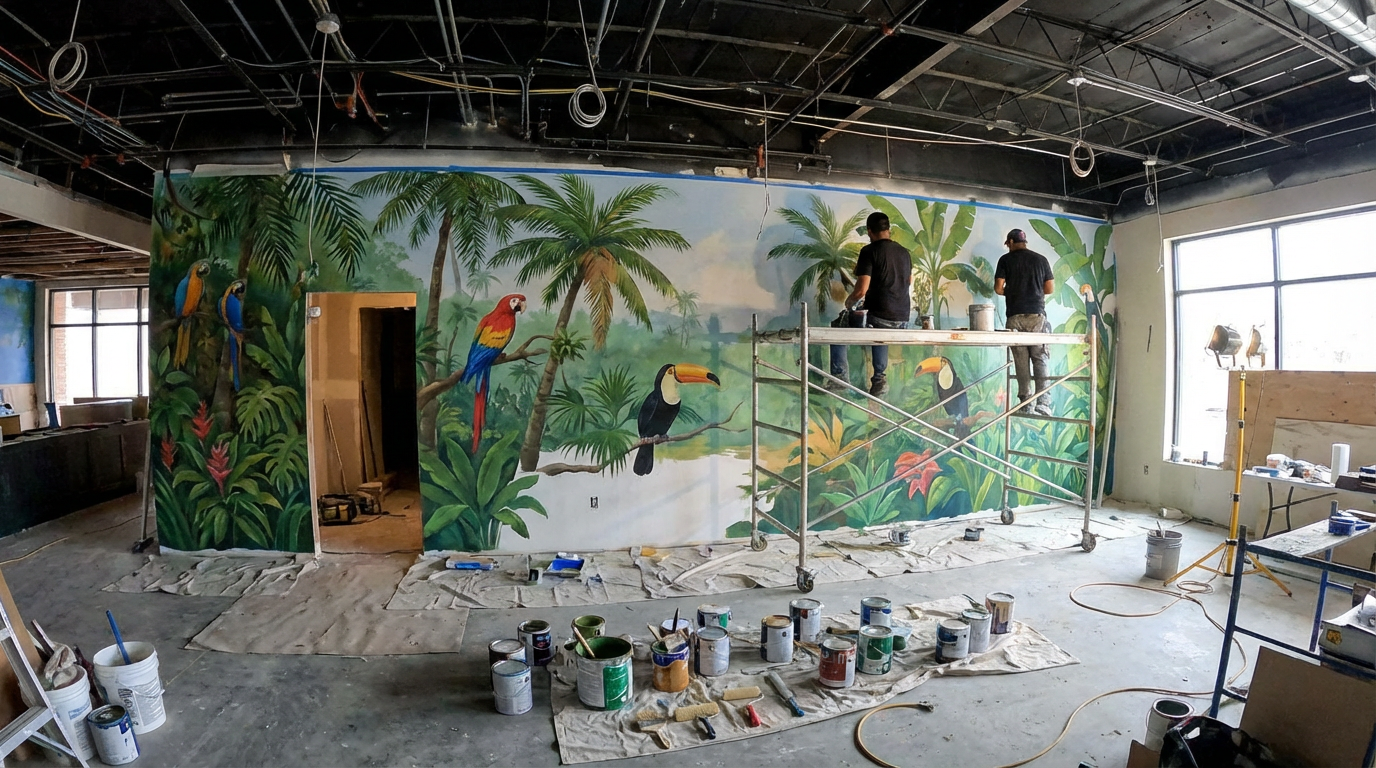
Every project begins with a conversation — not about art, but about the space itself. What does this room need to feel like? Who walks through it? What mood should linger after they leave? We visit the space when possible, or study photographs carefully. We look at the light, the architecture, the furniture, the flow of people.
A mural for a quiet lounge is not the same as a mural for a high-energy cafe. The space tells us what it needs. Our job is to listen before we pick up a brush.
We sketch before we paint.
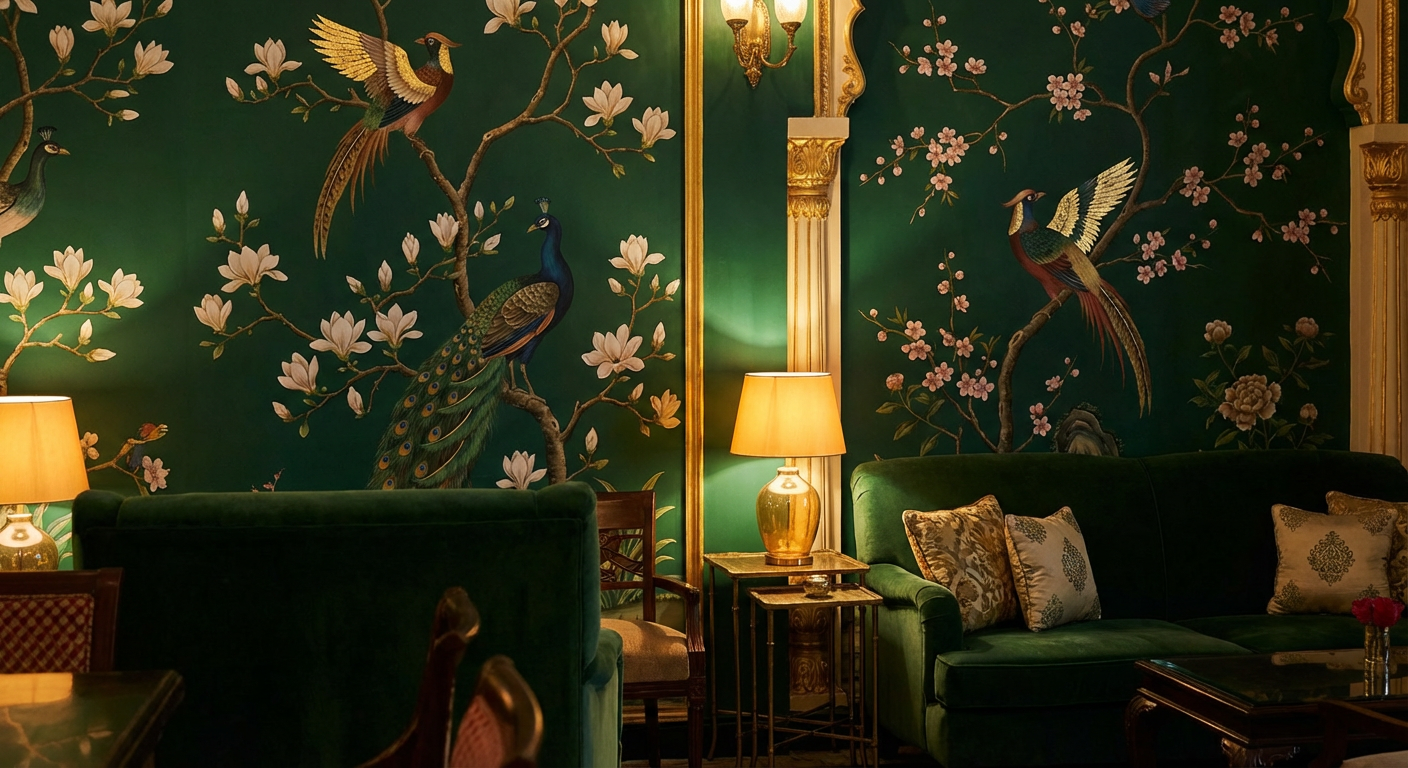
Once we understand the space, the design work begins. Our artists create rough sketches, colour studies, and composition drafts. We explore multiple directions — sometimes a tropical motif speaks to the space, sometimes it needs something geometric, sometimes something entirely unexpected emerges.
This stage is collaborative. We share sketches, discuss colour palettes, refine compositions. Nothing goes on a wall until both the client and the artist feel confident about the direction. The drawing board is where the vision takes shape.
The right artist for the right project.
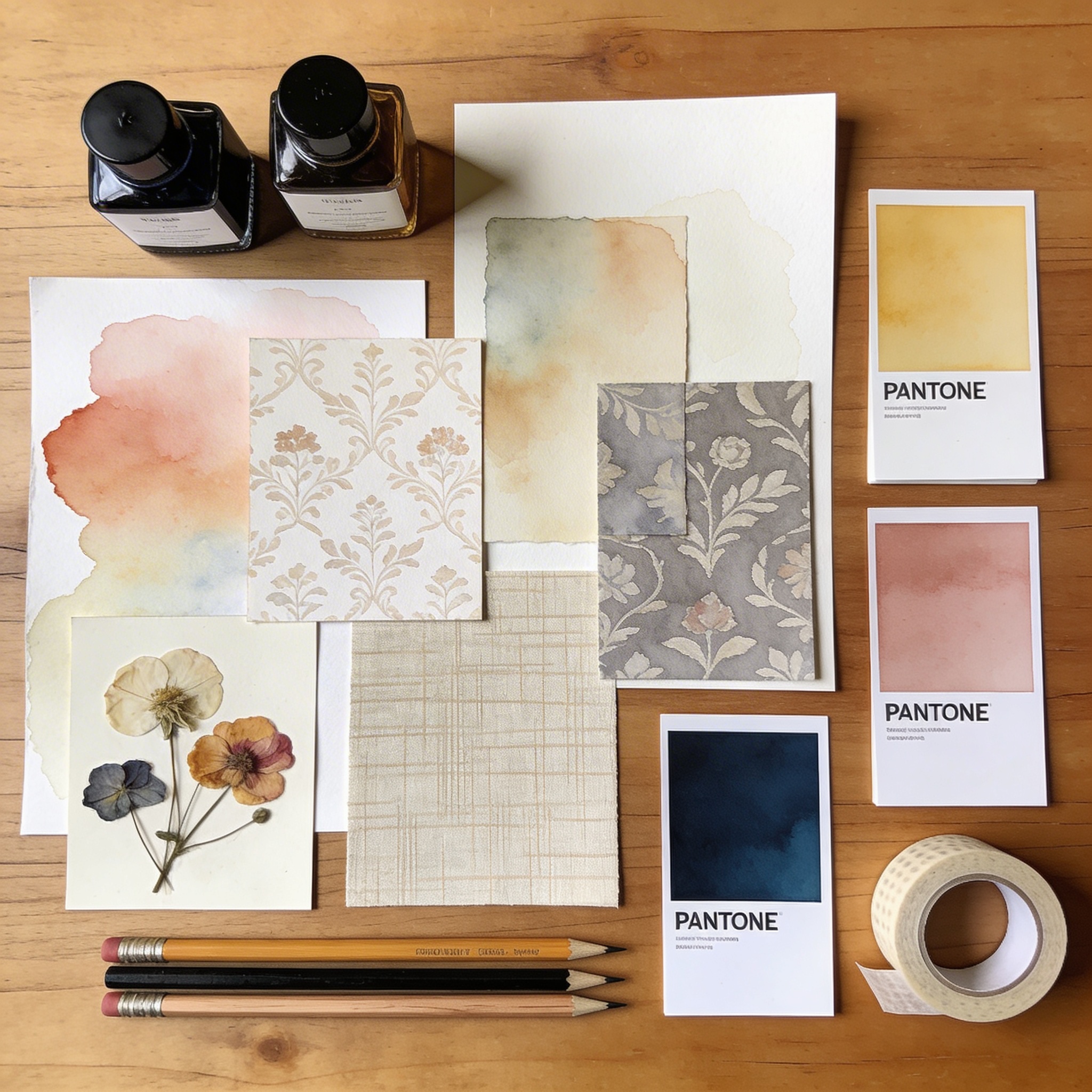
Not every artist suits every project. A bold, instinctive painter like Bunty brings energy to a street-art mural but might not be the right fit for a delicate botanical in a fine dining room. Sandhya's thick palette knife work transforms a lounge wall but might overwhelm a minimal cafe.
We match the artist to the project based on style, temperament, and the specific demands of the space. Sometimes one artist handles the entire project. Sometimes two collaborate. The goal is always the same — the best possible outcome for the space and the artist.
This is where the hands do the talking.
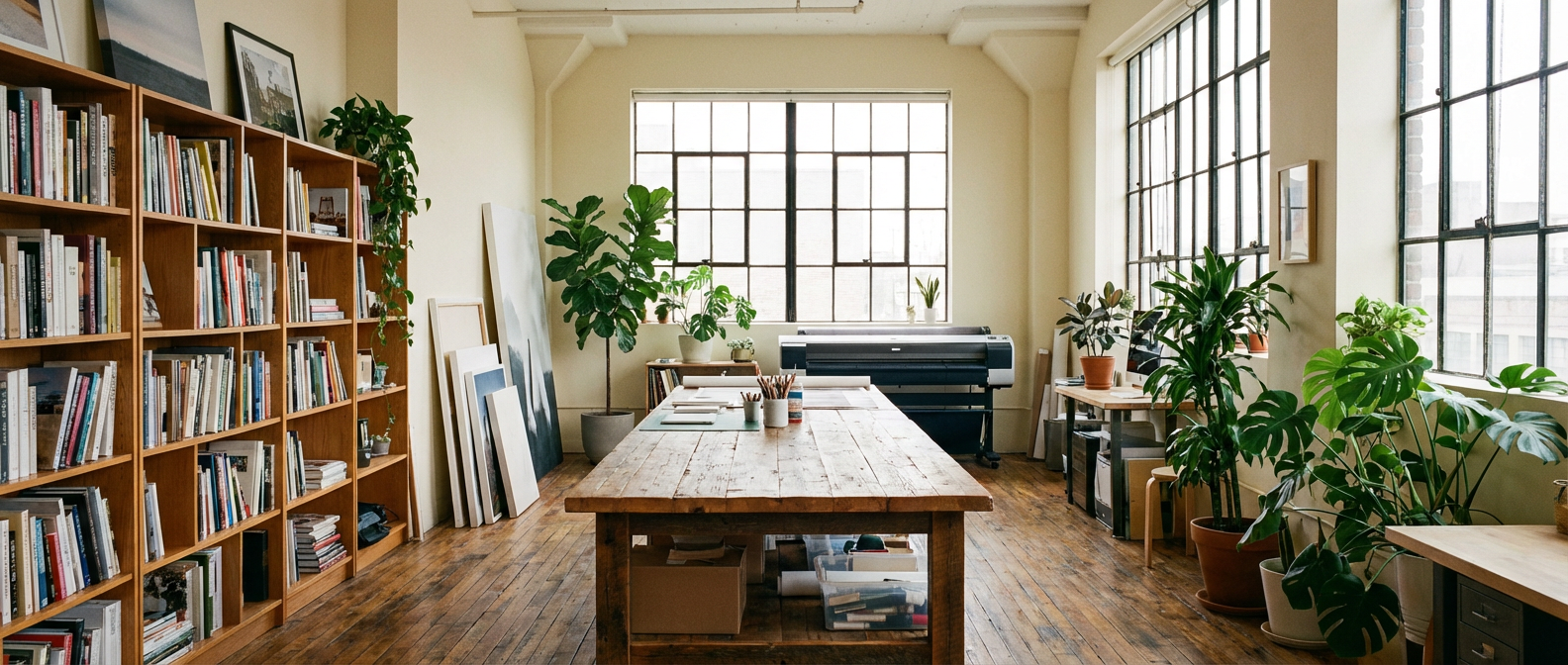
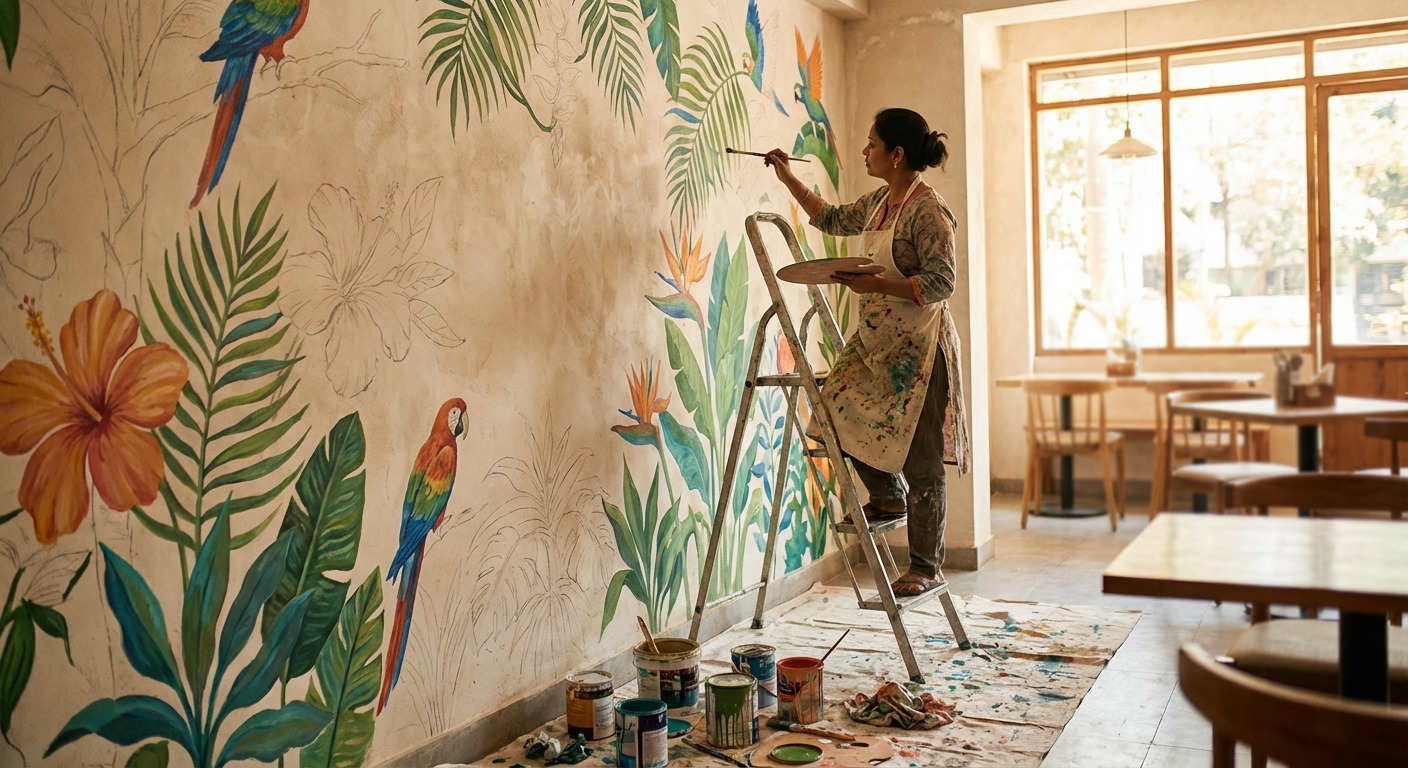
The artist begins. For wall murals, this means working on-site — setting up scaffolding, preparing the surface, mapping out the composition on the wall, and then painting. Hour by hour, the space transforms. For canvas paintings, the work happens in our studio — mixing pigments, loading brushes and palette knives, building the piece layer by layer.
This is the stage that cannot be rushed. A mural might take three days or two weeks, depending on scale and complexity. A painting might need dozens of layers to achieve the right depth. The artist decides when it is done — not the clock.
The details that make it last.
When the painting is complete, the work is not over. For murals, we apply protective coatings to ensure longevity — the art needs to withstand years of daily life in a commercial space. For canvas pieces, we check tension, apply varnish where needed, and ensure the work is gallery-ready.
Then comes the handover. We walk the client through the finished piece, explain the care it needs, and make sure they are happy with what has been created. This moment — standing in front of a transformed wall with the person who imagined it — is why we do this work.