Our Artists

Six independent artists. One shared belief in the handmade.

Each artist brings a distinct voice shaped by years of practice, different training, and personal conviction. Together, they give the studio its range. 12,000+ handmade paintings shipped to 62 countries — every one touched by these hands.

CM

Chanchal Mitra

Independent Veteran Artist

Decades of practice across traditional and contemporary styles
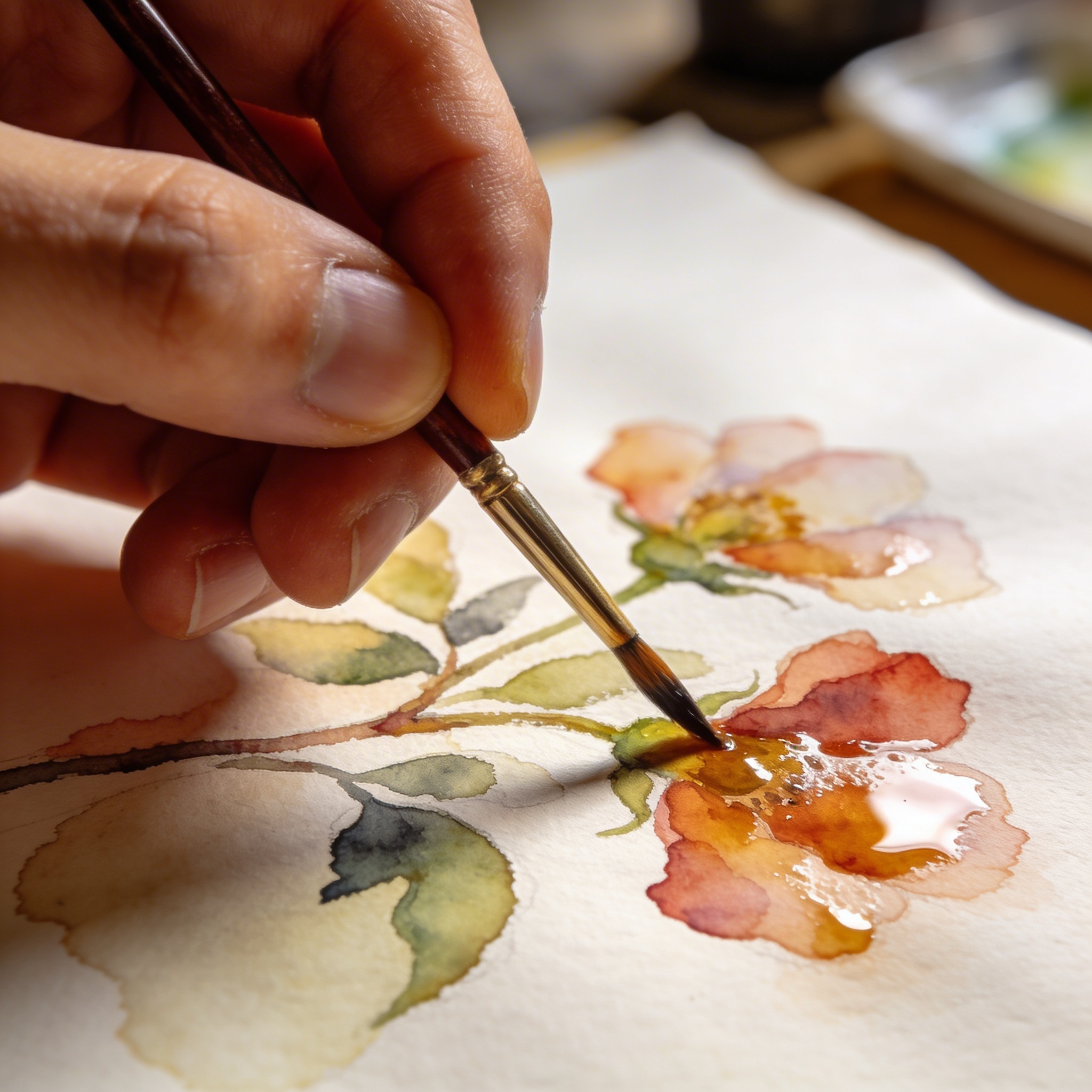
Artist painting in studio

The one who has seen every trend come and go — and kept painting through all of them.

Chanchal started painting before most of the team was born. He learned from watching masters in Kolkata, absorbing techniques through observation rather than textbooks. Over decades, he has moved between traditional Indian miniature work, contemporary portraiture, and landscape painting — never settling into one style because, as he says, the subject decides the method.

At Kolorkaari, Chanchal is the artist other artists go to when they are stuck. His understanding of colour mixing is intuitive — he can match any shade from memory, and his brushwork has the effortless control that only comes from doing something thousands of times. He paints slowly, deliberately, and the work shows it.

Painting is not about the hand. It is about the eye. The hand follows. After forty years, my hand knows where to go — I just have to see clearly.
BK

Bunty Kumar

Self-taught Senior Artist

Bold, instinctive work shaped by practice, not academia

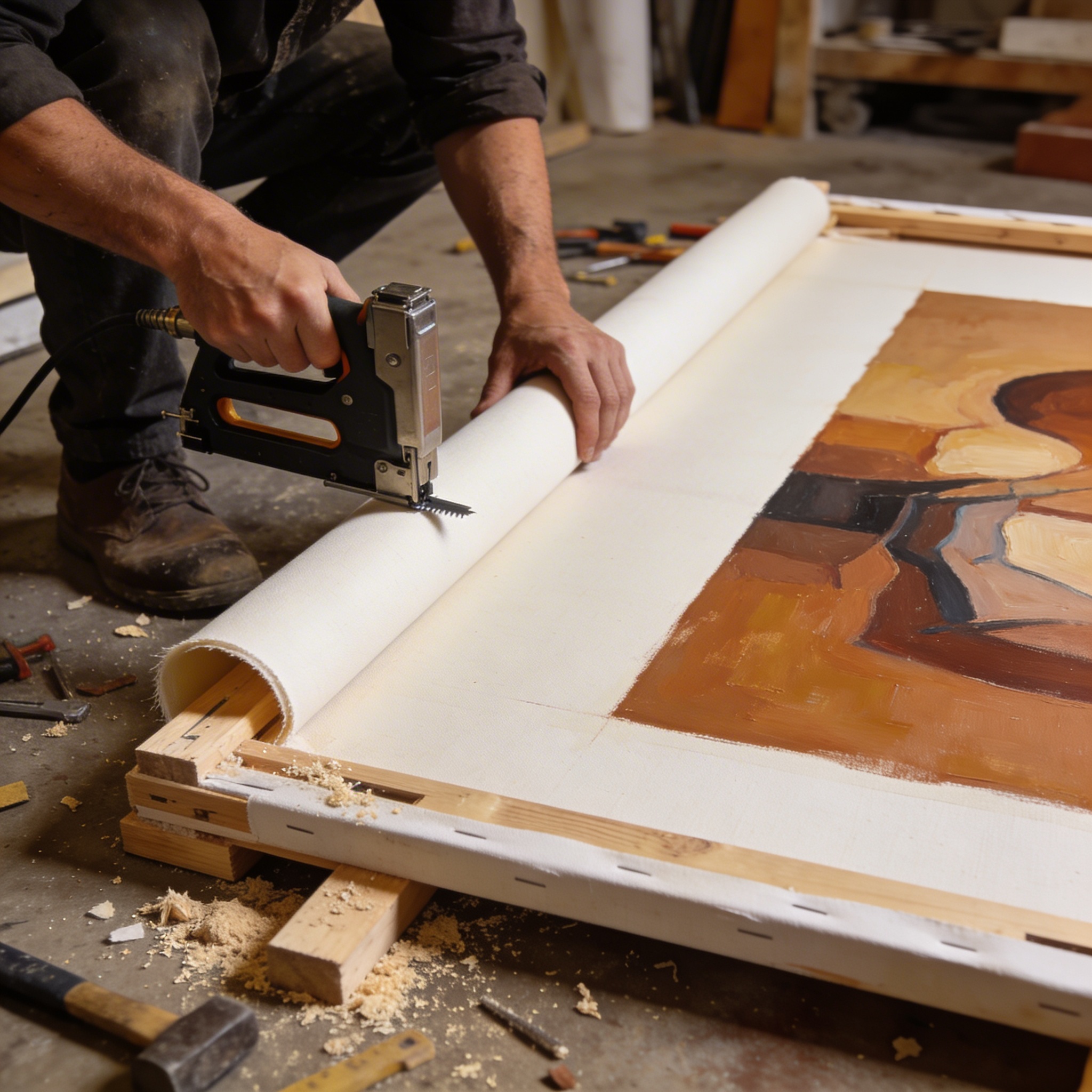
Canvas painting process

No degree, no formal training. Just thousands of hours of painting until the work spoke for itself.

Bunty never went to art school. He started by copying magazine covers as a teenager in a small town, teaching himself colour theory through trial and error. When he ran out of things to copy, he started creating. His early work was rough, unpolished — but it had an energy that trained artists often struggle to find.

Over the years, Bunty developed a style that is hard to categorise. His strokes are confident and bold, his compositions instinctive rather than planned. He works fast, trusting his hands to find the right mark. At Kolorkaari, he is the artist who takes on the projects that need raw energy — large canvases, expressive murals, work that needs to feel alive rather than perfect.

I never learned the rules, so I never had to unlearn them. I paint what feels right. Sometimes the best paintings happen when you stop thinking and just move the brush.
SK

Sandhya Kaushik

M.FA · Senior Artist

Palette knife impressionism — thick texture, vivid colour, movement

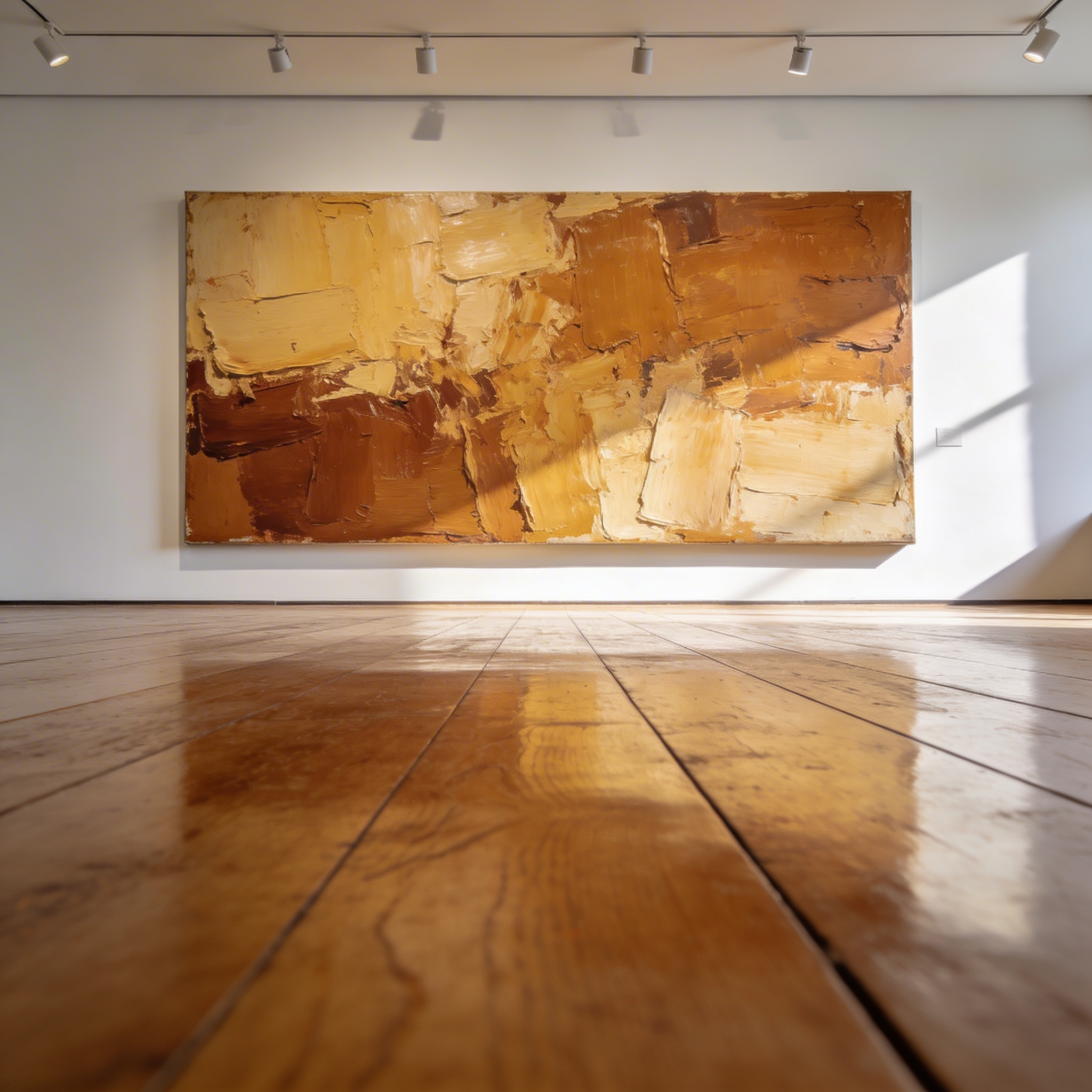
Abstract expressionist painting

She builds paintings the way a sculptor builds form — layer by layer, stroke by heavy stroke.

Sandhya studied fine art formally and emerged with a deep understanding of colour theory and composition. But what sets her apart is texture. She paints almost exclusively with palette knives, building thick impasto layers that catch light and create dimension you can feel with your fingertips. Her work is physical in a way that brushwork alone cannot achieve.

Her subjects tend toward landscape and atmosphere — rolling fields, stormy skies, autumn forests — but rendered with such intensity of colour that they feel more like emotional states than places. At Kolorkaari, Sandhya handles the work that demands presence — pieces that need to hold a room, command a wall, and reward close inspection.

A painting should not just be seen. It should be felt. When I load the knife with paint, I am not decorating a surface — I am building something that has weight, that has body. Flat painting is just a photograph with extra steps.
VG

Vaishnavi Gupta

M.FA · RML University Ayodhya

Geometric expressionism — structured forms, bold abstraction

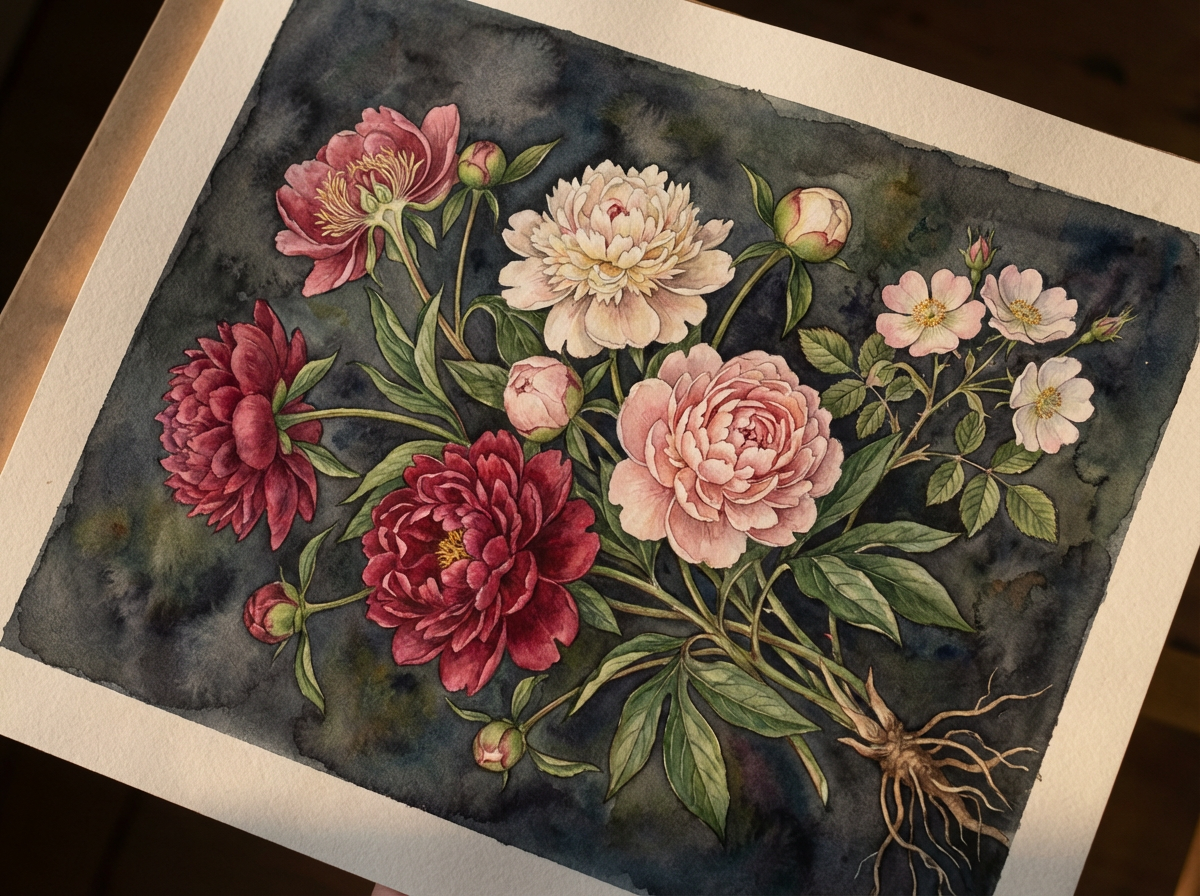
Botanical art study

Where mathematics meets emotion — structured forms that feel anything but cold.

Vaishnavi approaches painting the way an architect approaches space. Her compositions are built on geometric foundations — triangles, arcs, intersecting planes — but the way she fills them with colour and texture transforms rigid structure into something warm and breathing. She studied at RML University in Ayodhya, where she developed her distinctive approach to geometric expressionism.

Her work bridges the gap between abstraction and feeling. A Vaishnavi painting might look like a city seen from above, or a landscape reduced to its essential shapes, or simply an arrangement of forms that creates a specific mood. She plans meticulously, sketching compositions in pencil before touching paint, and the precision shows in the final work — every angle intentional, every colour relationship considered.

Geometry is not cold. A triangle can hold as much feeling as a portrait. The challenge is making the viewer forget the structure and feel only the emotion it contains.
TS

Trayambakeshwar Shuka

B.FA · RML University Ayodhya

Geometric expressionism — angular compositions, earthy palette

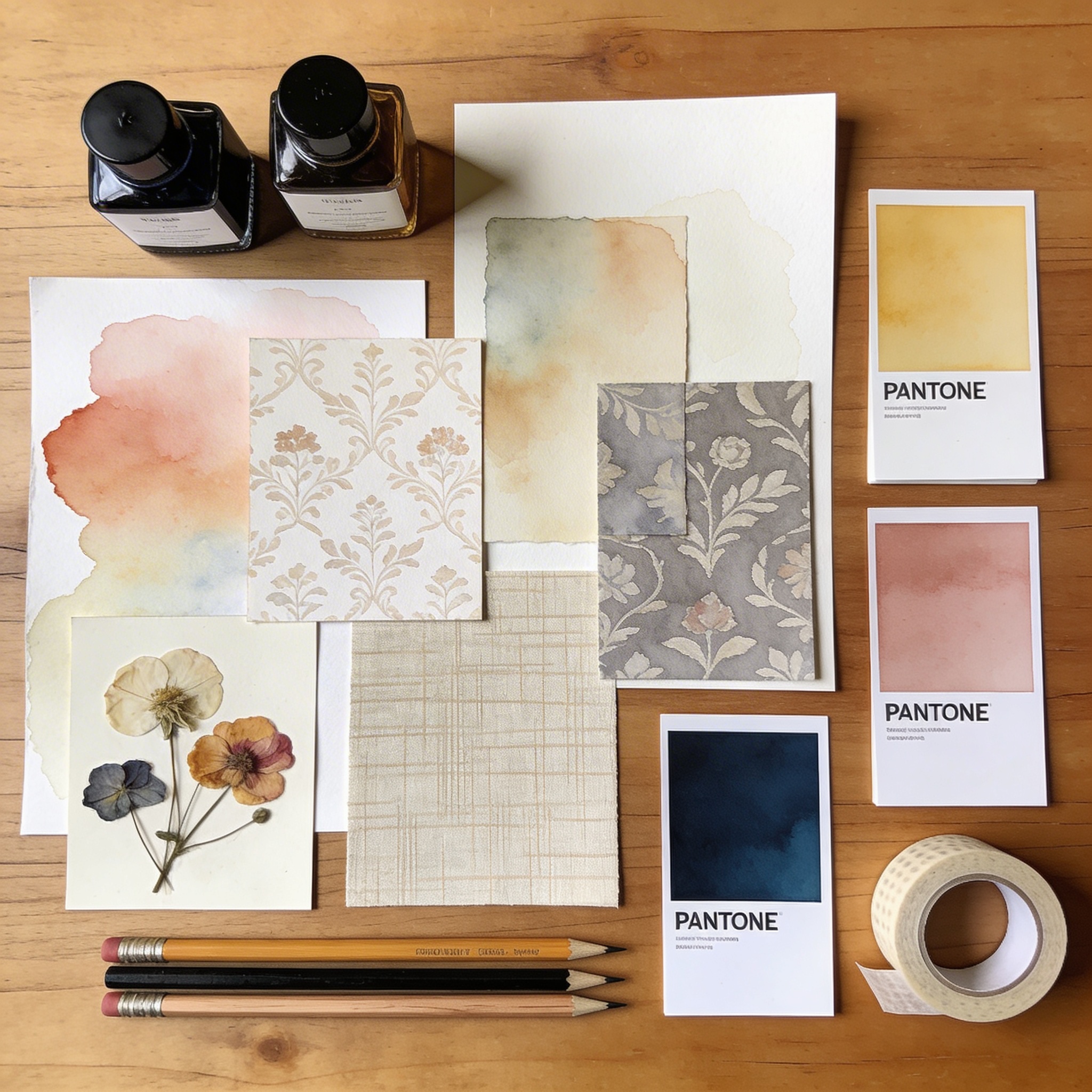
Studio materials and pigments

Earth tones and sharp angles — paintings that feel like they were carved, not brushed.

Trayambakeshwar — Tray to the studio — works in a palette drawn from the earth itself. Burnt sienna, raw umber, ochre, deep olive, charcoal. His compositions are angular and decisive, with sharp intersections and bold divisions of space that give his work a carved, almost sculptural quality. He trained at RML University alongside Vaishnavi, but their approaches diverged — where she seeks balance, he seeks tension.

His paintings are grounded, heavy, rooted. They evoke the feeling of old architecture, weathered stone, arid landscapes. At Kolorkaari, Trayambakeshwar is the artist who brings gravity to a collection — the piece that anchors everything around it. He works methodically, building his earthy palette one careful layer at a time.

I paint with the colours I see when I close my eyes — the soil, the old walls, the bark of trees. These are not invented colours. They are the colours of the world when you really look at it.
VG

Vinod Gautam

B.FA · RML University Ayodhya

Geometric expressionism — line, form, and colour in balance

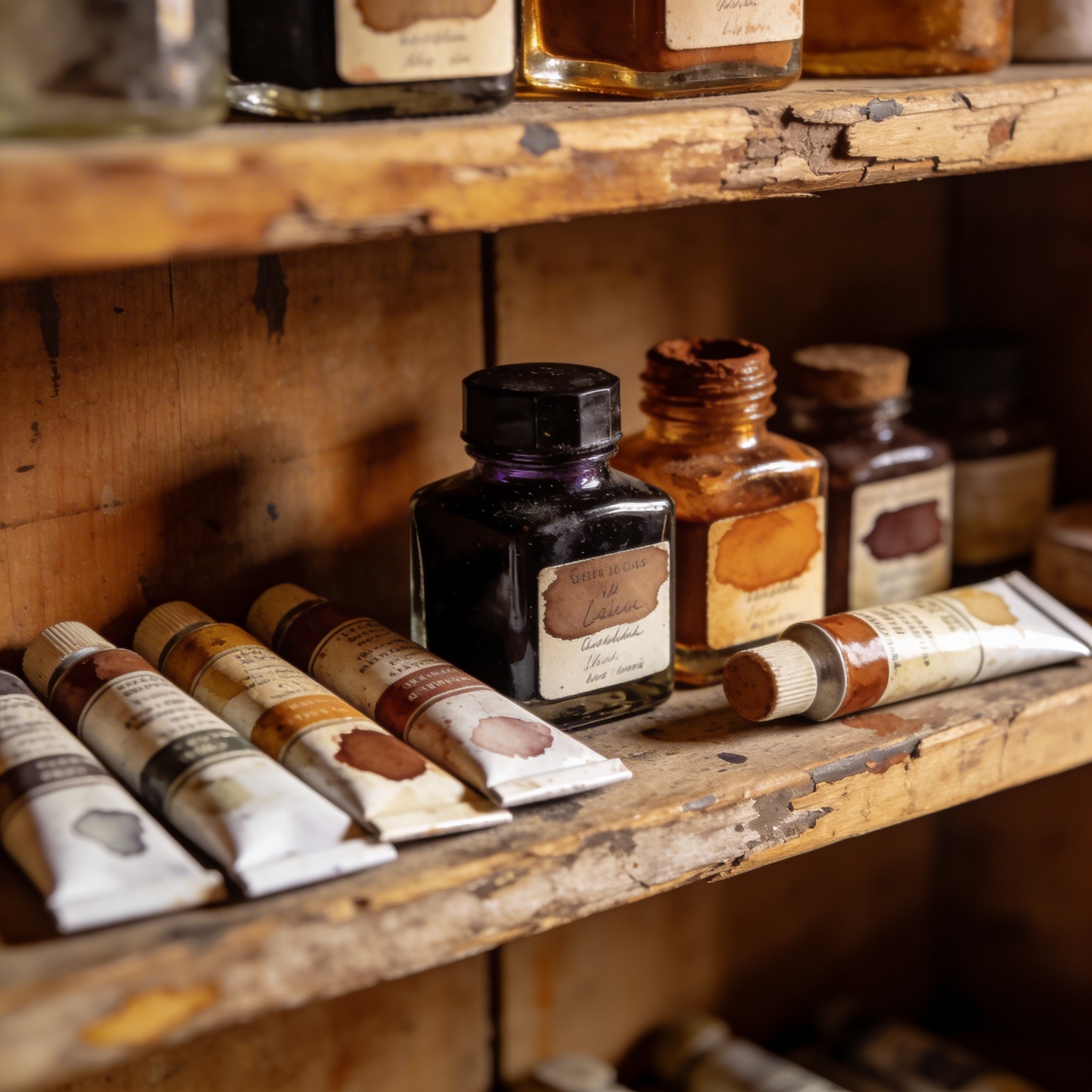
Ink and pigments

The quiet one. His paintings do the talking — balanced, considered, and impossibly precise.

Vinod is the most deliberate painter in the studio. Where others might sketch quickly and refine on canvas, Vinod plans every element before the first stroke. His work in geometric expressionism is defined by its equilibrium — line weight perfectly calibrated against colour intensity, positive space in exact dialogue with negative space. Nothing in a Vinod painting is accidental.

He studied at RML University alongside Trayambakeshwar and Vaishnavi, and the three share a foundation in geometric work, but Vinod's voice is the most restrained. His colour choices are precise rather than bold, his compositions balanced rather than tense. The result is work that feels calm, resolved, complete — the kind of painting you can look at for years and keep finding new relationships within it.

Balance is not the absence of tension. It is tension that has found its resolution. I paint until every element is exactly where it needs to be — not one stroke more.
6
Independent artists with distinct voices and years of practice
12,000+
Handmade canvas paintings shipped worldwide
62
Countries where our artists' work hangs on walls
2018
Founded. Started with a paintbrush, grew into a studio.