Two processes. One judgment.
A wall can be painted, or it can be designed and produced. The steps differ; the standard doesn't. Here is each path, in full — and then how we decide which one your wall wants.
By hand
Brush on wall, start to finish. Slower, irreplaceable, and visible in every stroke. A feature wall typically takes 6–12 days; large commercial walls run to six weeks.
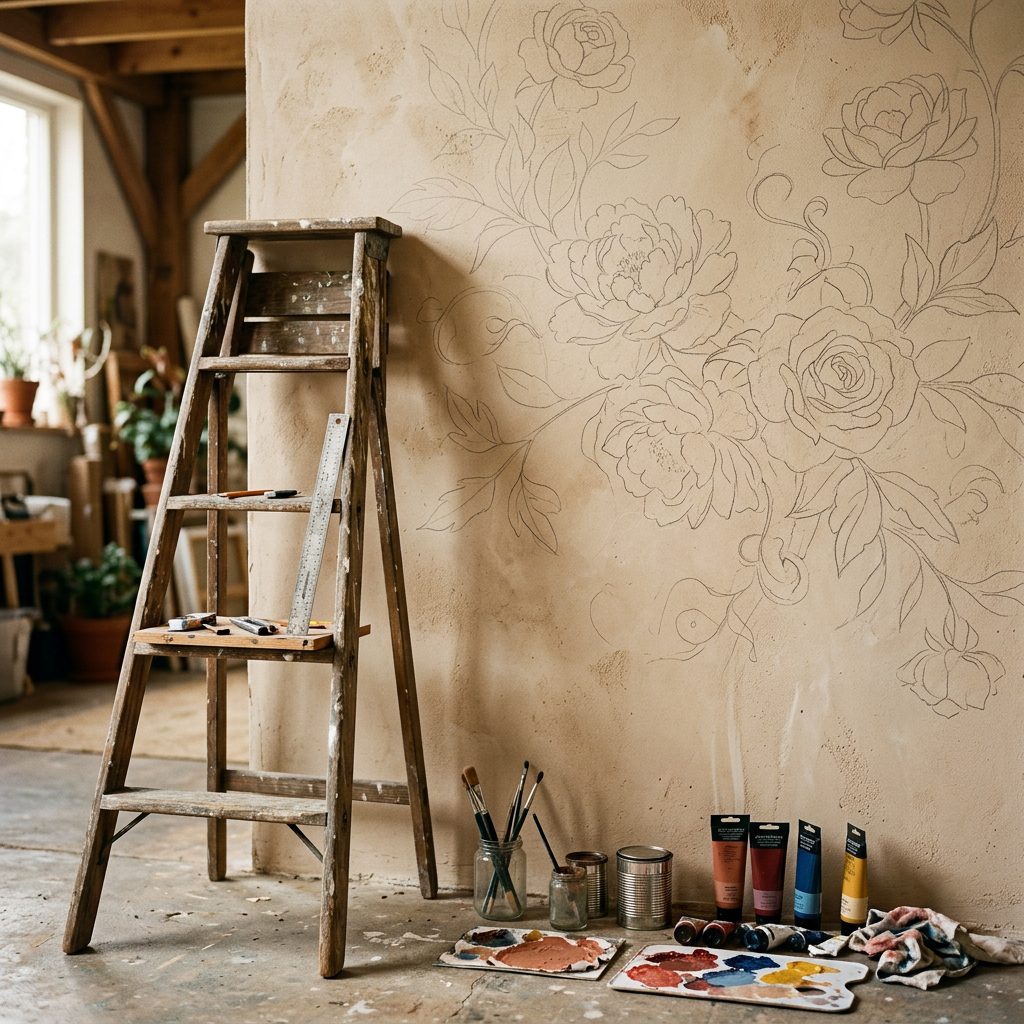
Sketch & grid
Charcoal, straight onto the wall. A full-scale grid keeps the drawing honest at sizes a sketchbook can't check. Nothing is painted until the client has stood in front of these lines.
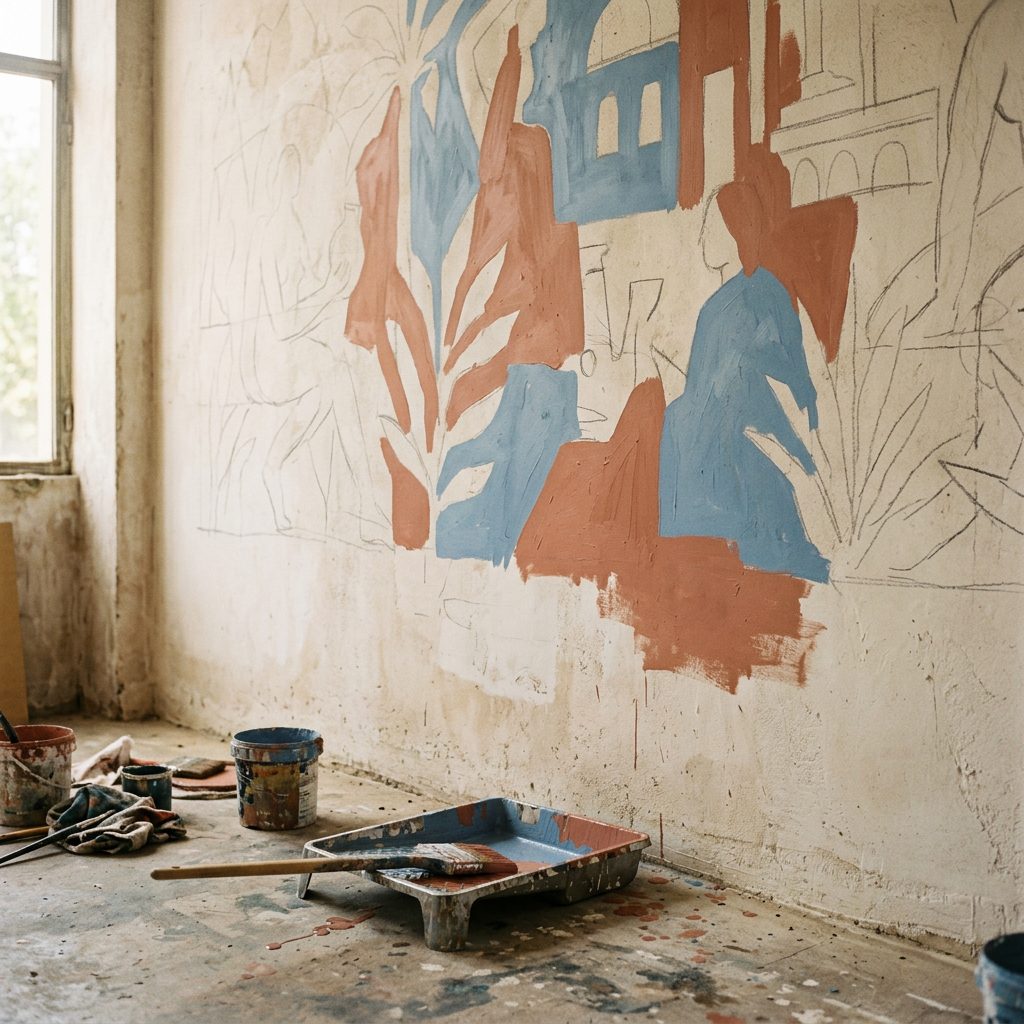
Underpaint
Flat blocks of colour set the masses. This is the stage where every mural looks wrong — clients are warned, then shown last week's photos of a finished wall that looked exactly this wrong.
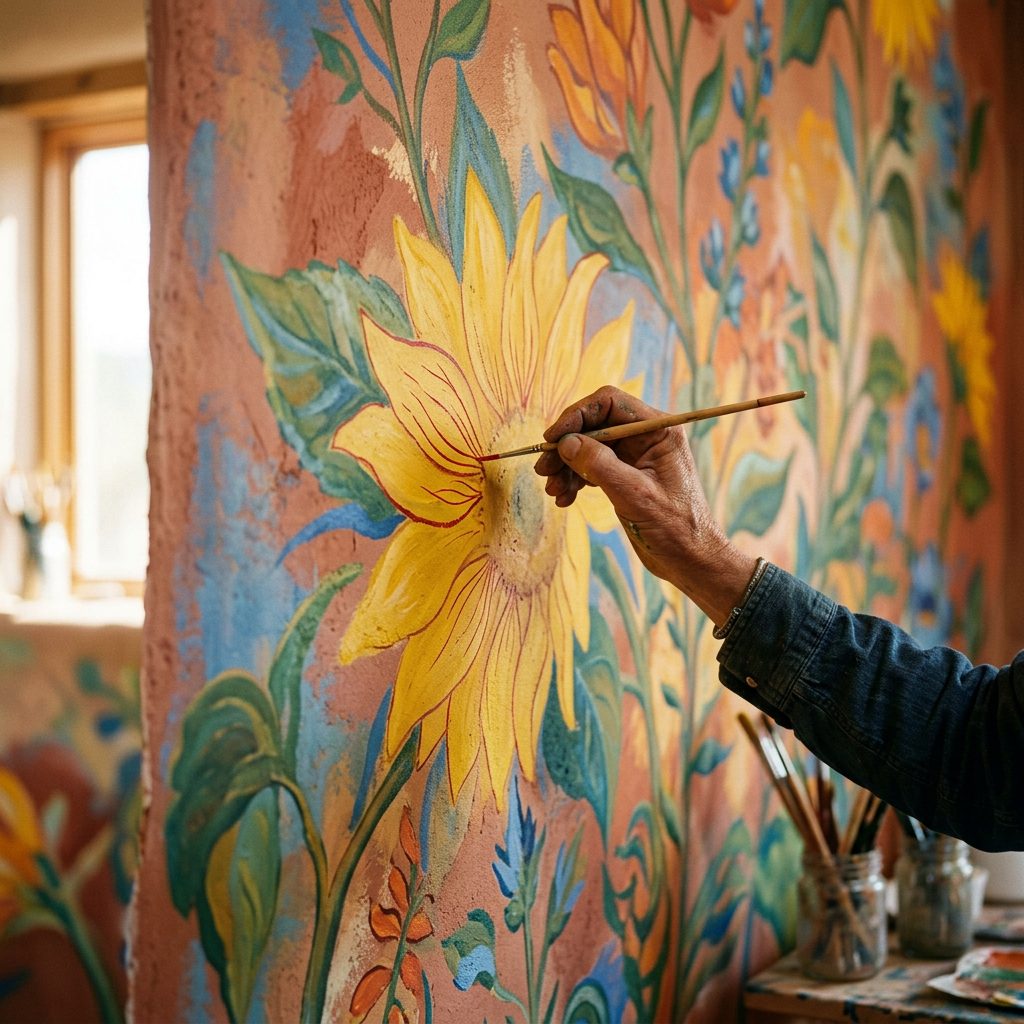
Detail
The long middle. Fine brushes, vermillion linework, glazes built thin so the plaster's texture survives. Most of a mural's days are spent here, and it's why no print can imitate one up close.
Correction
One pass with fresh eyes — usually a different artist than the one who painted the passage. Edges sharpened, values rebalanced against the room's real light, morning and evening both.
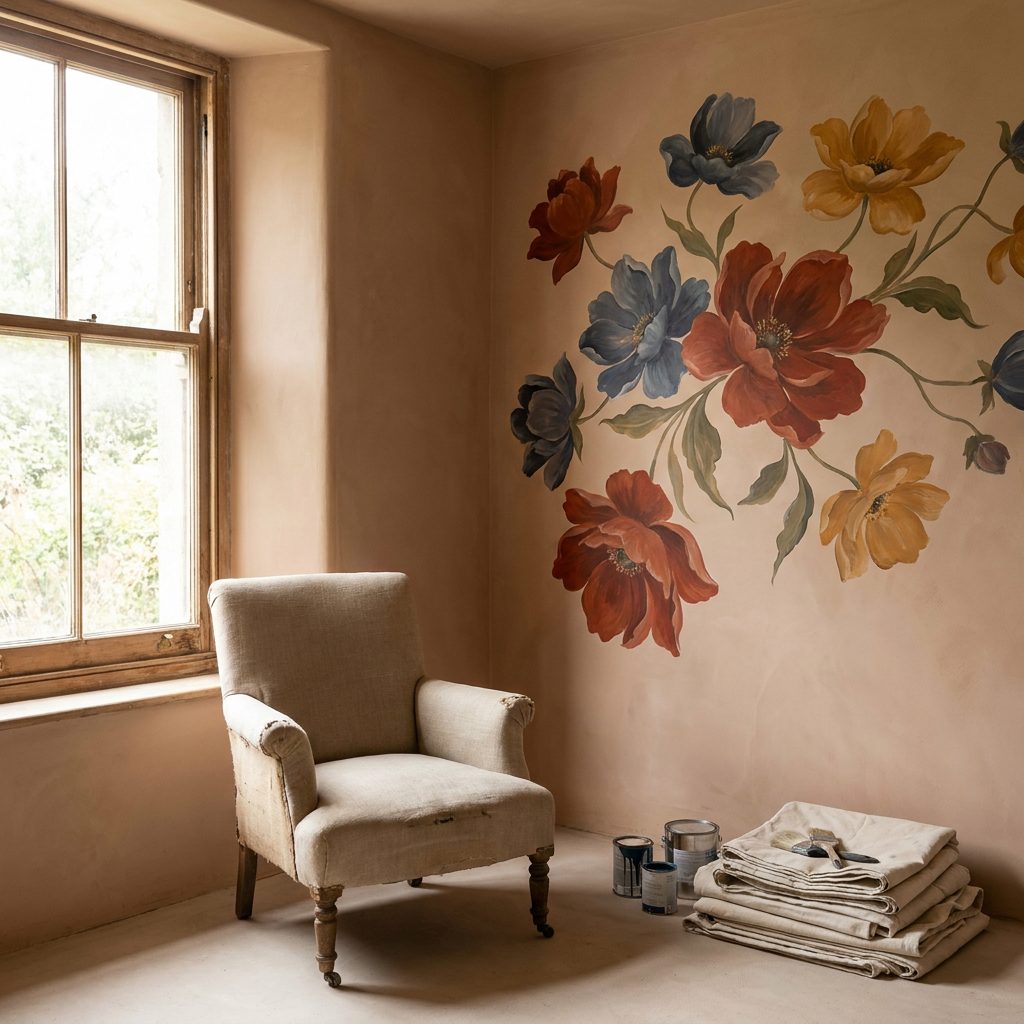
Reveal
Scaffolding down, drop cloths folded, furniture back. We hand over a jar of labelled touch-up pigment and a care note: no harsh solvents, dust with a dry cloth, call us before you repaint anything nearby.
By design
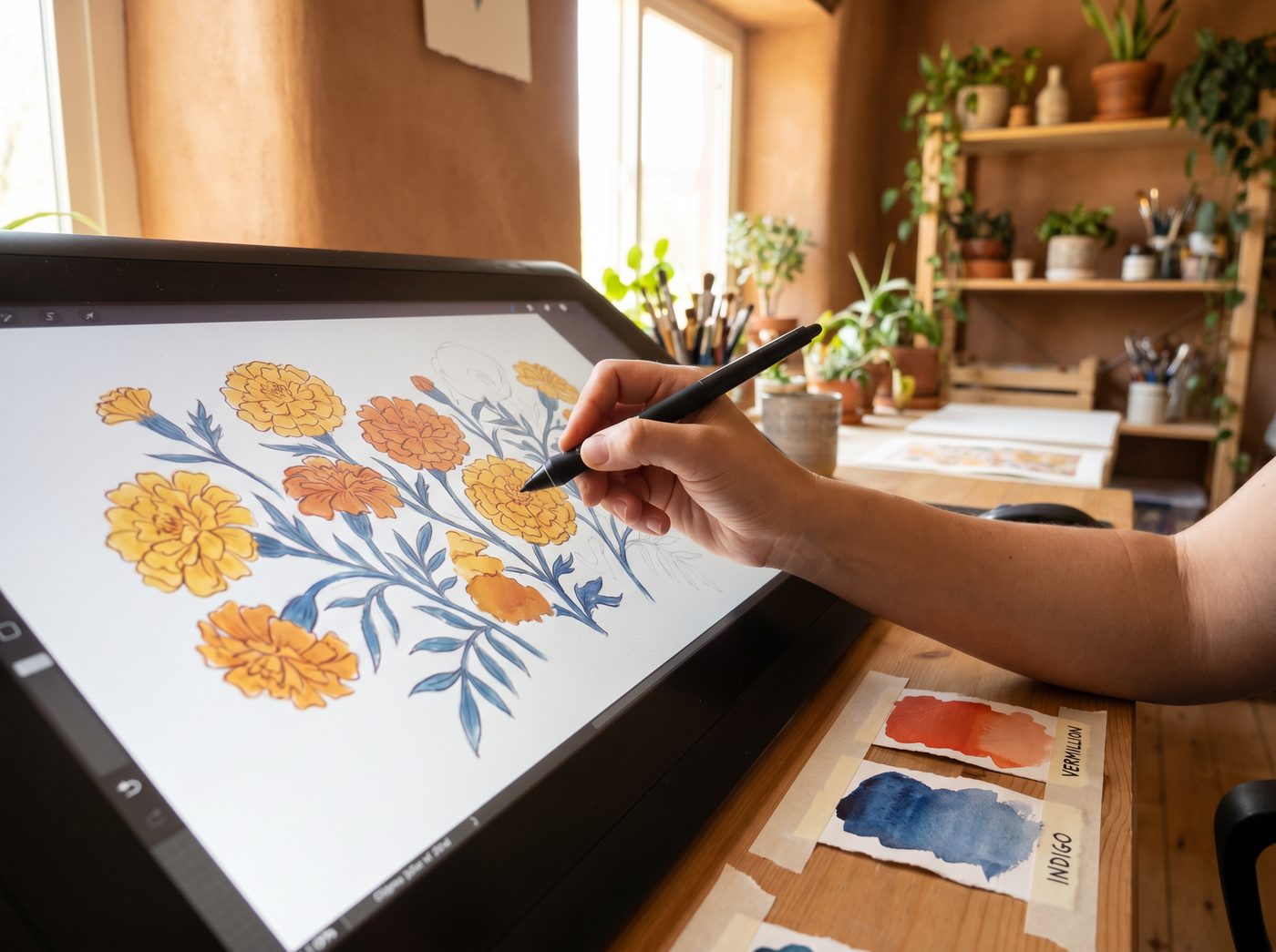
Concept built on screen, produced by press or fabricator, installed by hand. Faster on site, endlessly revisable before commitment — and the only path when the wall is in a city we can't paint in.
- Brief
Where is the wall, what hits it — sun, hands, steam, trolleys? What should a person feel standing in front of it? Photos and a rough measurement are enough to start.
- Concept
Two or three directions, composed at true wall proportion — never a square mockup stretched later. You see the design on a photo of your actual room.
- Artwork
The chosen direction is built to print resolution. Colours are matched to physical pigment swatches under warm and cool light, because screens lie and walls don't.
- Production
Print or fabrication through presses and workshops we've argued with for years. We approve a physical proof strip before the full run. Always.
- Install
Our hands or a supervised local crew, depending on geography. Seams planned away from eye lines. A designed wall should finish as cleanly as a painted one — that's the test.
Which does your wall want?
It probably wants a brush if —
- People will stand close to it: dining rooms, lobbies, headboard walls.
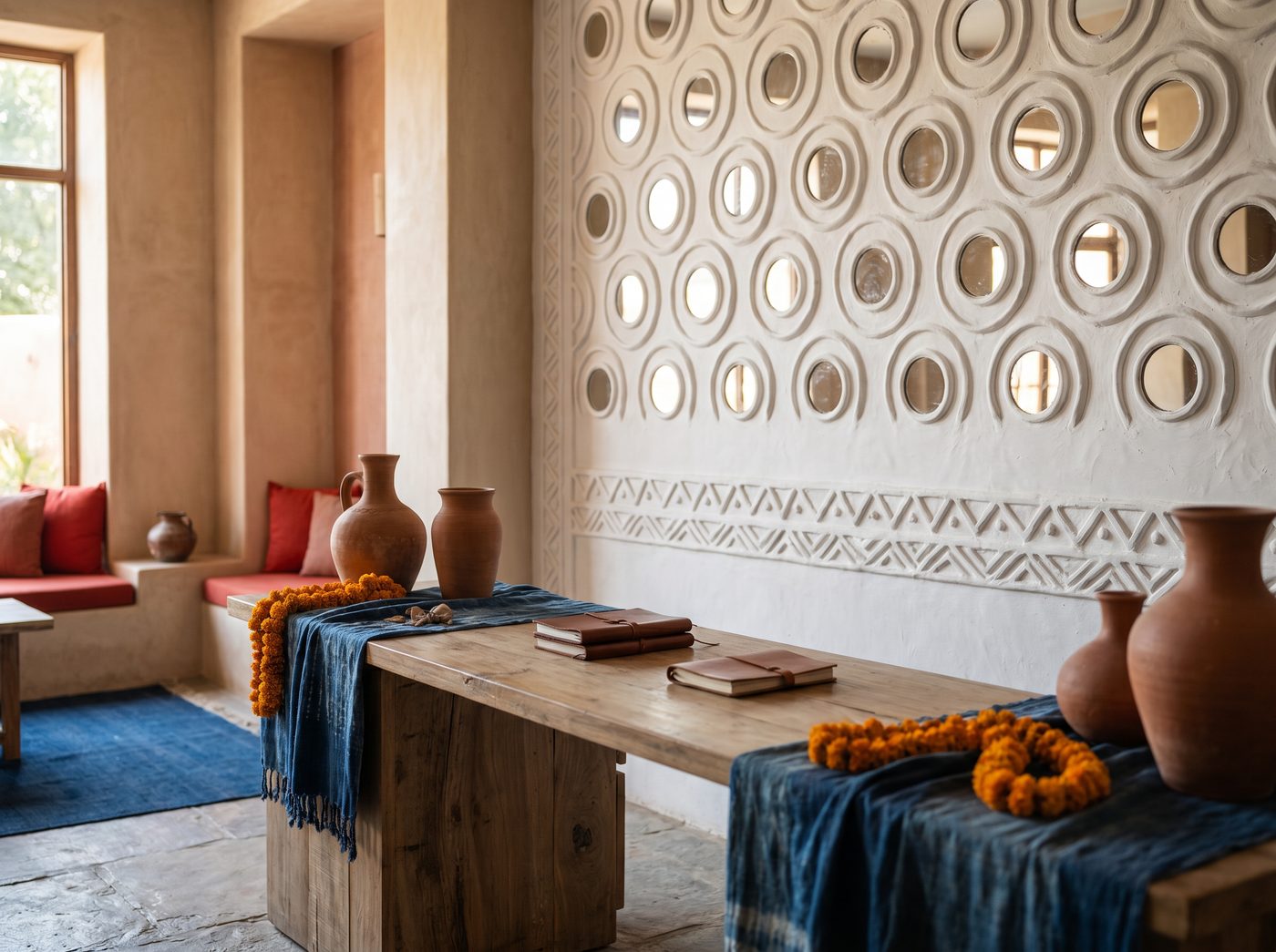
- The surface has character worth keeping — lime plaster, clay, old masonry.
- You want the work itself to be part of the story: guests watching it grow over weeks.
- The room's light is warm and low; brushwork holds depth where prints flatten.
- The schedule can give the wall 6–12 days (or more, gladly).
It probably wants the design bench if —
- The fit-out window is days, not weeks.
- The wall is somewhere we can't bring scaffolding and a month of brushes.
- The design needs revisions with a committee before anyone commits.
- It must repeat — one design across twelve branch offices, identical.
- The surface is glass, laminate or metal panel — places a brush won't love.
Not sure? Good — that's our call to make, not yours. Tell us about the wall. We'll tell you whether it wants a brush or a press, and then we'll make it.
Bring us the wall